
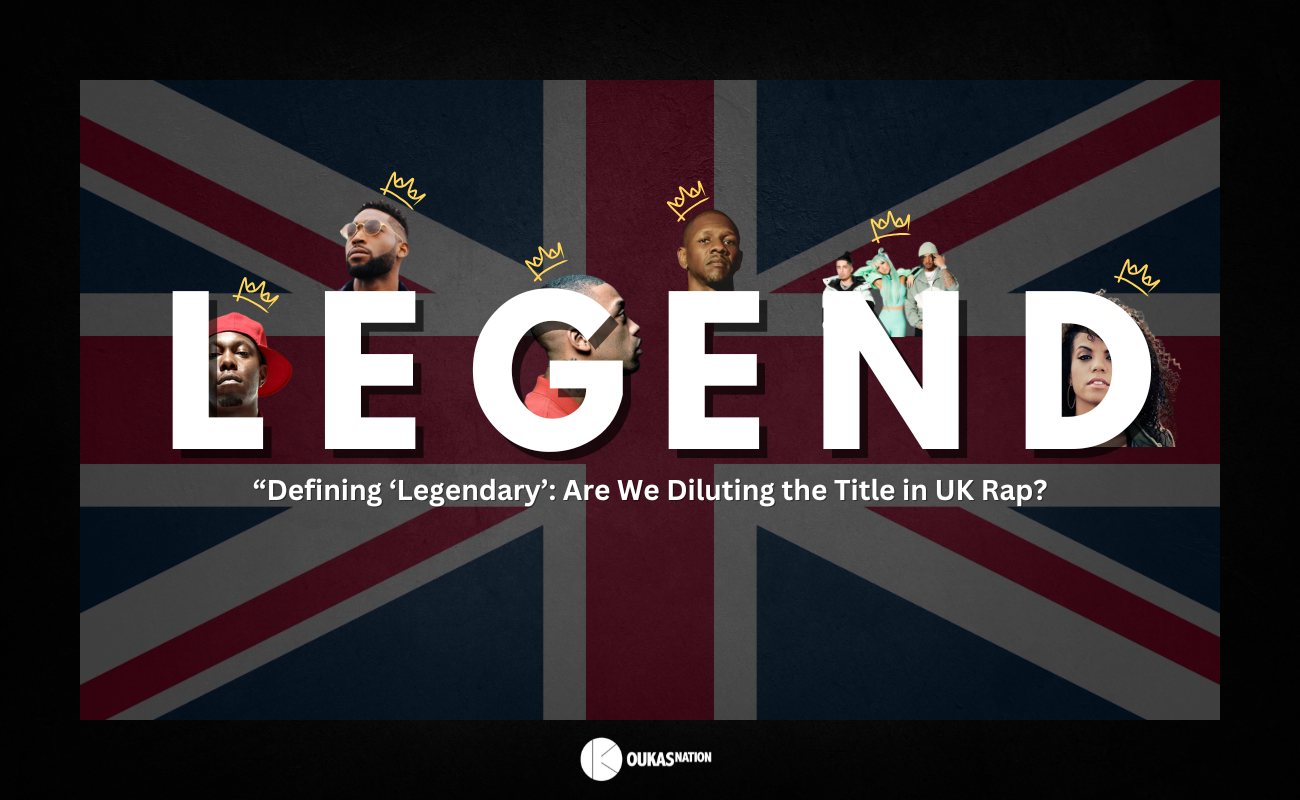
Regarding UK rap, “legend” is thrown around far too frivolously. Let’s start with this: the ONLY legends in UK rap are Dizzee Rascal, Tinie Tempah, Wiley, and (contentious as it may be) N-Dubz. Yes, they were a rap group, so I stand by it. Giggs gets an honourable mention, as his career could’ve been even bigger without early restrictions. Ms. Dynamite also deserves credit because most men couldn’t do what she did during her era.
Now that we’ve set the stage, let’s get into it.
What Makes Someone a Legend?
For me, achieving legend status isn’t just about being successful; it’s about achieving greatness on a grand scale over an extended period. Legendary figures undeniably impact their field, and their achievements often become benchmarks for others.
Most industries have a clear consensus about who deserves the title. However, in UK rap, this clarity is often muddied, and the criteria for “legend” seems blurred.
A Tale of Two Standards

Let’s use Dizzee Rascal as an example. A pioneer of Grime Music, Dizzee transcended the genre, setting standards that are still unmatched. Compare him to others often labelled as legends from his era, and you’ll see the gap immediately.
Here’s a quick breakdown:
Dizzee Rascal
- Albums: 8
- Top 10 Albums: 5
- Certifications: 7 Platinum, 3 Gold, 3 Silver
- Awards: 19 (including a Mercury Prize and an MBE)
- Other Achievements: 4 UK #1 singles, international recognition, and iconic cultural moments like the FIFA Street soundtrack.
Now, let’s look at some contemporaries often mentioned in the same breath:
Kano
- Albums: 6
- Top 10 Albums: 2
- Certifications: 3 Gold, 3 Silver
- Awards: 5
D Double E
- Albums: 4
- Top 10 Albums: 0
- Certifications: 0
- Awards: 0
Ghetts
- Albums: 4
- Top 10 Albums: 1
- Certifications: 0
- Awards: 3
The numbers speak for themselves. Dizzee’s impact and accomplishments are entirely on another level. The disparity remains glaring even when you factor in other metrics like influence, longevity, and cultural reach.
A Broader Perspective
To clarify, being legendary isn’t just about numbers or stats. High-performing longevity, cultural impact, and influence also play a huge role. However, these factors must be considered critically, without bias or nostalgia.

Let’s use a football analogy: Wilfried Zaha is an exceptional player, but he wouldn’t be considered a legend of the sport. However, he might be a Crystal Palace legend, which is a more appropriate scale. Similarly, many UK rappers celebrated as legends are more accurately described as legends within their niche or era. But BIG UK RAP AS A WHOLE?!?!
IMPOSSIBLE.
Perspective and Context in Comparison
It’s easy to keep comparing names, but the conclusion remains the same. Many so-called UK rap legends don’t compete against those at the top. Let me be clear again, this doesn’t mean these artists are bad rappers, far from it. I even respect and enjoy artists like Skepta and Chip, but based on the criteria I outlined earlier, I wouldn’t classify them as legends in UK rap.
Think about this: even if you’ve never watched golf, you know who Tiger Woods is. Or take Formula One. Whether or not you’ve followed the sport, you’ve heard of Lewis Hamilton. These names transcend their fields. Their legendary status isn’t an accident; it results from consistent, extraordinary achievement that resonates far beyond their core audience.
Context matters when comparing. Eras, age, and geography also play crucial roles in this discussion. What was achieved in the early 2000s, with fewer resources and a smaller market for UK rap, is not directly comparable to today’s landscape, where social media and streaming platforms have created opportunities that didn’t exist back then.
Take someone like Aitch, for example. While he might never be considered a legend, his career trajectory already surpasses some artists hailed as icons in UK rap (with all due respect).
How does that add up?
The American Contrast
I admire the honesty in critical assessments of the American music scene. Artists aren’t automatically labelled as legends just because they’ve had a few hits or enjoyed temporary popularity. In the UK, however, there’s often a reluctance to engage in this critical discourse.
This lack of scrutiny leads to situations where artists with middling achievements are placed in the same category as genuine trailblazers. Remembering what I said about the factors when comparing, Bow Wow, often mocked in the US, has a career (check the stats) that surpasses many so-called UK rap legends.
Again, how does that work out?
The Bigger Picture
To truly assess an artist’s legendary status, we need to look at the bigger picture:
- Did they transcend their genre or territory?
- Did they achieve a high sustained success and impact over an extended time?
- Are their accomplishments recognised both domestically and/or internationally?
Using these criteria, it’s clear that most UK rappers considered legends fall short. That’s not to say they’re not talented or influential; they just don’t meet the standard of true legendary status.
Final Thoughts
This post isn’t meant to downplay anyone’s contributions to UK rap or stir unnecessary controversy. It’s simply an attempt to spark a more honest conversation about what we mean when we use the term “legend.”
I know this might ruffle a few feathers, but if you strip away the emotion and look at the facts, you’ll see where I’m coming from. Let’s discuss this in the comments. I’d love to hear your thoughts.
So, what do you think? Are we too quick to call UK rappers legends, or am I just being overly critical?